
Table of Contents
What is an SRV Record?
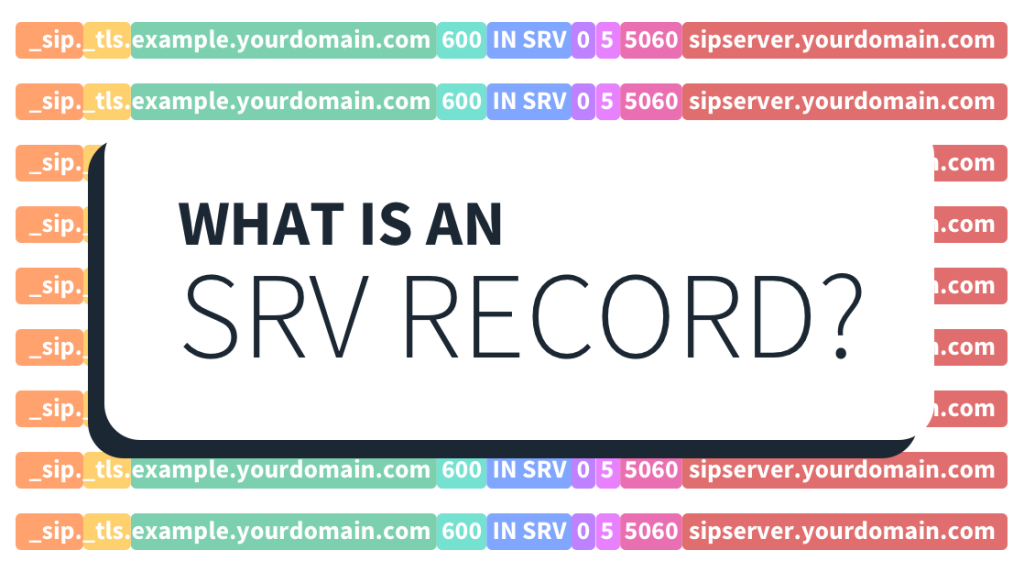
A Service (SRV) record is a type of DNS (Domain Name System) resource record used to specify information about the location of services within a domain. It allows administrators to associate a particular service, such as email, with a specific hostname and port number on a target server.
Here’s a breakdown of the components of an SRV record:
- Service: Specifies the service being offered. Examples include “_sip” for SIP (Session Initiation Protocol) services, “_ftp” for FTP (File Transfer Protocol) services, “_ldap” for LDAP (Lightweight Directory Access Protocol) services, etc.
- Protocol: Indicates the transport protocol used for the service, typically either “tcp” for TCP/IP or “udp” for UDP/IP.
- Name: The symbolic name of the desired service. It usually begins with an underscore followed by the service name, followed by a period and the protocol, e.g., “_service._protocol”.
- TTL (Time to Live): The duration for which the record is cached by DNS servers, expressed in seconds.
- Class: The DNS class, typically “IN” for Internet.
- Priority: Specifies the priority of the target host, with lower values indicating higher priority. This is useful when multiple servers provide the same service.
- Weight: Used to load balance between multiple targets with the same priority. The probability of a client selecting a particular target is proportional to its weight relative to the total weight of all targets.
- Port: The port number on which the service is available.
- Target: The domain name of the server providing the service.
For example, an SRV record for a SIP service might look like this:
_sip._udp.example.com. IN SRV 0 5 5060 sipserver.example.com.
This record indicates that the SIP service for the domain “example.com” is available on the server “sipserver.example.com” at port 5060, with a priority of 0, weight of 5, and using the UDP protocol.
The uses of SRV record
SRV (Service) records in DNS (Domain Name System) serve several important purposes, making them a valuable tool for network administrators:
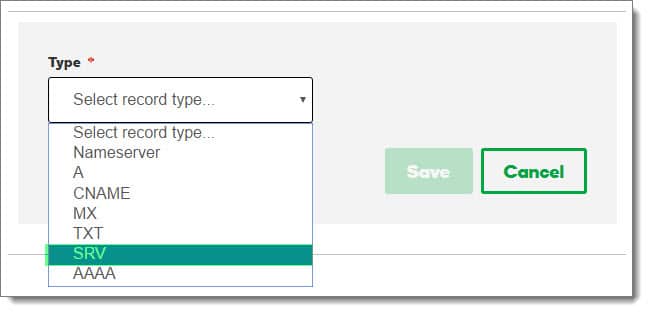
- Service Location: The primary use of SRV records is to specify the location of services within a domain. This includes services such as email (SMTP), instant messaging (XMPP), Voice over IP (SIP), domain controllers (LDAP), and more. SRV-records provide a standardized way to identify the hostname and port number where each service is available.
- Load Balancing: SRV-records support priority and weighting mechanisms, allowing administrators to specify multiple servers offering the same service with different priorities and weights. This enables load balancing among servers, distributing client requests more evenly across available resources.
- High Availability: By specifying multiple servers for a service with different priorities, SRV-records facilitate high availability configurations. Clients can attempt connections to servers in order of priority, falling back to lower priority servers if higher priority ones are unavailable.
- Dynamic Service Discovery: SRV-records are often used in conjunction with dynamic service discovery protocols such as DNS Service Discovery (DNS-SD) and Service Location Protocol (SLP). These protocols allow clients to automatically discover network services by querying DNS for SRV records, simplifying network configuration and administration.
- Protocol and Port Specification: SRV records allow administrators to specify the protocol (TCP or UDP) and port number on which each service is available. This flexibility enables services to run on non-standard ports and supports various network protocols.
- Cross-Domain Service Location: SRV records can be used to specify the location of services across different domains. This is useful for organizations with distributed networks or multi-domain environments, allowing services to be easily located and accessed regardless of their location.
- Service Prioritization: SRV records support priority values, allowing administrators to prioritize certain servers over others when multiple servers offer the same service. This is particularly useful for specifying backup or failover servers with lower priority values.
SRV (Service) records in DNS (Domain Name System) serve several important purposes, making them a valuable tool for network administrators:
- Service Location: The primary use of SRV records is to specify the location of services within a domain. This includes services such as email (SMTP), instant messaging (XMPP), Voice over IP (SIP), domain controllers (LDAP), and more. SRV records provide a standardized way to identify the hostname and port number where each service is available.
- Load Balancing: SRV records support priority and weighting mechanisms, allowing administrators to specify multiple servers offering the same service with different priorities and weights. This enables load balancing among servers, distributing client requests more evenly across available resources.
- High Availability: By specifying multiple servers for a service with different priorities, SRV records facilitate high availability configurations. Clients can attempt connections to servers in order of priority, falling back to lower priority servers if higher priority ones are unavailable.
- Dynamic Service Discovery: SRV-records are often used in conjunction with dynamic service discovery protocols such as DNS Service Discovery (DNS-SD) and Service Location Protocol (SLP). These protocols allow clients to automatically discover network services by querying DNS for SRV records, simplifying network configuration and administration.
- Protocol and Port Specification: SRV-records allow administrators to specify the protocol (TCP or UDP) and port number on which each service is available. This flexibility enables services to run on non-standard ports and supports various network protocols.
- Cross-Domain Service Location: SRV-records can be used to specify the location of services across different domains. This is useful for organizations with distributed networks or multi-domain environments, allowing services to be easily located and accessed regardless of their location.
- Service Prioritization: SRV records support priority values, allowing administrators to prioritize certain servers over others when multiple servers offer the same service. This is particularly useful for specifying backup or failover servers with lower priority values.
Overall, SRV records provide a standardized and flexible mechanism for specifying the location of network services within DNS, enabling efficient service discovery, load balancing, and high availability configurations in complex network environments.
The advantages and disadvantages of SRV record

Advantages
- Flexible Service Location: SRV-records provide a standardized and flexible way to specify the location of services within a domain. This allows administrators to easily configure and manage service endpoints, regardless of their hostname or port number.
- Load Balancing: SRV records support priority and weighting mechanisms, enabling administrators to distribute client requests among multiple servers offering the same service. This facilitates load balancing, improving overall service performance and reliability.
- High Availability: By specifying multiple servers with different priorities in SRV records, administrators can create high availability configurations. Clients can attempt connections to alternate servers if higher priority ones are unavailable, ensuring continuous service availability.
- Dynamic Service Discovery: SRV records are often used in conjunction with dynamic service discovery protocols, allowing clients to automatically discover network services by querying DNS. This simplifies network configuration and administration, especially in large or distributed environments.
- Cross-Domain Service Location: SRV-records can be used to specify the location of services across different domains. This enables seamless access to services in multi-domain environments, enhancing interoperability and connectivity.
Disadvantages:
- Complexity: Configuring and managing SRV records can be complex, especially for administrators unfamiliar with DNS protocols and syntax. Proper configuration requires understanding of SRV record format, priority and weighting mechanisms, and service-specific parameters.
- Limited Protocol Support: While SRV records support TCP and UDP protocols, they may not be suitable for all network protocols or services. Some services may rely on proprietary or non-standard protocols that are not compatible with SRV records, limiting their applicability.
- Dependence on DNS Infrastructure: SRV records rely on DNS infrastructure for service discovery and resolution. If DNS servers are unavailable or misconfigured, clients may experience difficulties locating services, potentially leading to service disruptions or downtime.
- Client Support: While most modern network clients and applications support SRV record resolution, older or legacy systems may not. Compatibility issues with older client software can limit the effectiveness of SRV records in certain environments.
- Administrative Overhead: Maintaining accurate and up-to-date SRV records requires ongoing administrative effort. Changes to service endpoints, server priorities, or network topology may necessitate updates to SRV-records, increasing administrative overhead and complexity.
Overall, while SRV-records offer significant benefits in terms of service location, load balancing, and high availability, they also introduce complexity and administrative overhead. Careful planning and management are required to leverage SRV-records effectively in diverse network environments.