
Table of Contents
Introduction:
In the ever-evolving landscape of internet technology, the protocols that govern our online interactions play a crucial role in ensuring seamless communication between devices. IPv4 (Internet Protocol version 4) has been the backbone of the internet for decades, providing a structured way for devices to connect and communicate. However, with the explosive growth of internet-connected devices, the limitations of IPv4 have become increasingly apparent. Enter IPv6 (Internet Protocol version 6), the next-generation protocol designed to address these limitations and support the future of global connectivity. In this blog post, we’ll explore the key differences between IPv4 and IPv6, highlighting why this transition is essential for the continued growth and security of the internet.
What is IPv4?
IPv4 (Internet Protocol version 4) is the fourth version of the Internet Protocol (IP), which is used to identify devices on a network through an addressing system. It is one of the core protocols of the internet and is responsible for routing traffic across the internet.
Key Features of IPv4:
- Addressing: IPv4 uses a 32-bit address system, which allows for approximately 4.3 billion unique addresses. An IPv4 address is typically written in decimal format as four octets separated by periods (e.g., 192.168.0.1).
- Subnetting: IPv4 supports subnetting, which allows for the creation of smaller networks within a larger network. This is useful for organizing network architecture and managing traffic.
- Routing: IPv4 facilitates the routing of packets of data between devices across networks. Routers use the destination IP address in a packet to determine the best path for the data to travel to reach its destination.
- Network Address Translation (NAT): To alleviate the shortage of IP addresses, NAT allows multiple devices on a local network to share a single public IP address.
Uses of IPv4:
- Internet Connectivity: IPv4 is the most widely used protocol for assigning IP addresses to devices that connect to the internet, such as computers, smartphones, and servers.
- Local Networks: IPv4 is used in home and corporate networks to assign IP addresses to devices for internal communication.
- Domain Name System (DNS): DNS servers use IPv4 addresses to translate human-readable domain names (like www.example.com) into IP addresses that can be used to route data.
- Virtual Private Networks (VPNs): VPNs use IPv4 to establish secure connections between remote devices and private networks.
- Web Hosting: Websites and online services are hosted on servers that use IPv4 addresses to be accessible to users across the internet.
IPv4 has been the dominant protocol for many years, but due to the limited number of available addresses, IPv6 (Internet Protocol version 6) has been developed to replace IPv4 eventually. IPv6 uses a 128-bit address system, vastly increasing the number of possible addresses.
What is IPv6?
IPv6 (Internet Protocol version 6) is the most recent version of the Internet Protocol (IP), designed to address the limitations of IPv4, particularly the shortage of IP addresses. IPv6 provides a much larger address space and introduces several improvements to network management, security, and performance.
Key Features of IPv6:
- Addressing: IPv6 uses a 128-bit address system, allowing for an astronomical number of unique addresses (approximately 3.4 × 10³⁸). IPv6 addresses are written in hexadecimal format and separated by colons (e.g., 2001:0db8:85a3:0000:0000:8a2e:0370:7334).
- Simplified Header: The IPv6 header is simpler than the IPv4 header, which reduces the processing time for routers and improves overall network performance.
- No Need for NAT: With the vast address space in IPv6, there is no need for Network Address Translation (NAT), which is commonly used in IPv4 to manage address shortages by allowing multiple devices to share a single public IP address.
- Auto-configuration: IPv6 supports both stateless and stateful address configuration. Stateless address autoconfiguration (SLAAC) allows devices to configure themselves automatically when connected to an IPv6 network, without the need for a DHCP server.
- Built-in Security: IPv6 has integrated support for IPsec (Internet Protocol Security), which provides end-to-end encryption and authentication, making it more secure than IPv4.
- Improved Multicast and Anycast: IPv6 enhances support for multicast (sending data to multiple destinations simultaneously) and introduces anycast (sending data to the nearest of multiple possible destinations), improving the efficiency of data transmission.
Uses of IPv6:
- Internet of Things (IoT): The vast address space of IPv6 is crucial for the growing number of IoT devices, which require unique IP addresses to connect to the internet and communicate with each other.
- Future-Proofing: As the number of internet-connected devices continues to grow, IPv6 ensures that there will be enough IP addresses available for decades to come.
- Global Internet Connectivity: IPv6 is gradually replacing IPv4 for internet connectivity, especially in regions where IPv4 addresses are exhausted. It provides the foundation for the next generation of internet infrastructure.
- Enhanced Network Performance: IPv6 improves routing efficiency and reduces the burden on routers, leading to faster and more reliable network performance, particularly in large and complex networks.
- Improved Security: With mandatory IPsec support, IPv6 provides stronger security for internet communications, helping to protect against attacks and unauthorized access.
- Simplified Network Configuration: IPv6’s auto-configuration capabilities reduce the need for manual network configuration, making it easier to manage large networks and deploy new devices.
- Support for Advanced Services: IPv6 supports advanced networking services, such as mobile IP (which allows devices to maintain their IP addresses while moving between networks) and Quality of Service (QoS) for prioritizing certain types of traffic.
While IPv6 adoption has been gradual due to the widespread use of IPv4, it is becoming increasingly important as more devices connect to the internet, and the limitations of IPv4 become more apparent.
common difference between IPv4 and IPv6
IPv4 and IPv6 are both versions of the Internet Protocol, but they have several key differences. Here’s a comparison of the most common differences between the two:
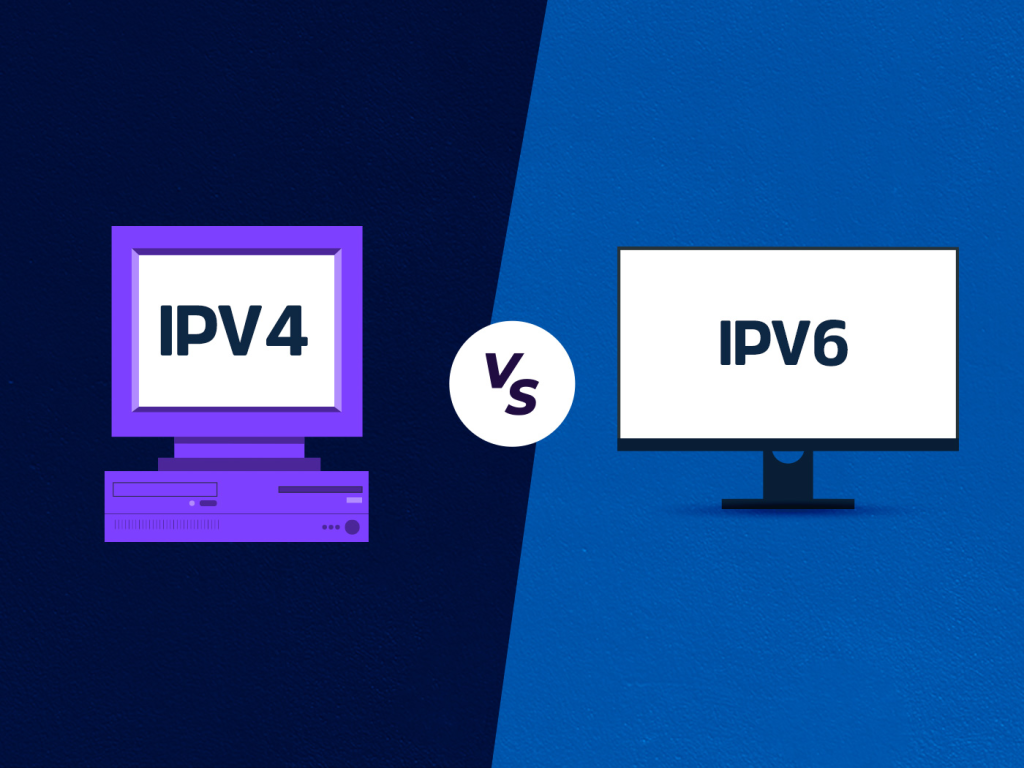
| Features | IPv4 | IPv6 |
| Address Length | Uses a 32-bit address format, which allows for approximately 4.3 billion unique addresses. | Uses a 128-bit address format, providing an almost limitless number of unique addresses (about 340 undecillion). |
| Address Format | Addresses are written in decimal and separated by periods, like 192.168.0.1. | Addresses are written in decimal and separated by periods, like 192.168.0.1. |
| Header Complexity | The header is more complex, containing 12 fields (including optional fields), which can slow down processing. | The header is simplified, with only 8 mandatory fields, leading to more efficient processing. |
| Address Configuration | Typically requires manual configuration or DHCP (Dynamic Host Configuration Protocol). | Supports both stateless (SLAAC) and stateful (DHCPv6) auto-configuration, making it easier to set up devices on a network. |
| Security | Security is optional and implemented through IPsec, but not natively supported. | Security features, including IPsec, are built into the protocol and mandatory, offering enhanced security. |
| Network Address Translation (NAT) | Widely used to conserve IP addresses by allowing multiple devices to share a single public IP address. | NAT is generally not needed due to the vast number of available IP addresses, allowing each device to have its unique public IP. |
| Broadcasting | Supports broadcasting, where data is sent to all devices on a network. | Does not support traditional broadcasting; instead, it uses multicast and anycast for more efficient data distribution. |
| Routing Efficiency | Routing tables can be large and complex due to the limited address space and fragmentation. | More efficient routing thanks to a hierarchical addressing system and simplified headers. |
| Support for QoS (Quality of Service): | QoS is supported but less sophisticated and typically relies on the Type of Service (ToS) field. | Has improved QoS capabilities with a Flow Label field, allowing for better handling of data streams. |
| Deployment and Adoption | Still widely used, but the number of available addresses is nearly exhausted. | Increasingly adopted, especially in regions and applications where large numbers of IP addresses are needed, such as IoT. |
These differences reflect the evolution of internet technology and the need for a more scalable and secure internet protocol, which IPv6 aims to provide.
Conclusion:
As the internet continues to expand, the transition from IPv4 to IPv6 is inevitable and necessary. While IPv4 has served us well, its limitations in address space, security, and efficiency are becoming increasingly problematic. IPv6 not only offers a vastly larger address space but also introduces enhancements in security, network management, and overall performance. Understanding the differences between IPv4 and IPv6 is crucial for businesses, network administrators, and anyone involved in the tech industry as they prepare for the future of networking. Embracing IPv6 is not just about adopting a new protocol; it’s about ensuring the internet remains scalable, secure, and accessible for generations to come.